


This essay provides a comparative evaluation of the efficiency and performance of axial flux and radial flux motors for electric vehicle applications. The focus of the study is on the power density and torque of these two types of motors. The evaluation is based on the results obtained from the ld lq lookup tables, motor control, and electromagnetic analysis using FEA.
We examine the efficiency and performance of the motors under different operating conditions, such as varying loads and speeds. We also consider the impact of the motor control algorithms on the performance of the motors. The electromagnetic analysis of the motors includes the calculation of back EMF, which is a key factor in determining the performance of the motor.
The study reveals the strengths and weaknesses of each motor design and provides insights into the factors that affect their performance.
Then we also discuss the implications of these findings for the use of axial and radial flux motors in electric vehicle applications.
Overall, this essay provides a comprehensive evaluation of the efficiency and performance of axial and radial flux motors, using advanced analytical tools such as ld lq lookup tables, motor control, electromagnetic analysis, and FEA. The insights gained from this study can help researchers and engineers in the field of electric vehicle propulsion to select the optimal motor design for their specific application.

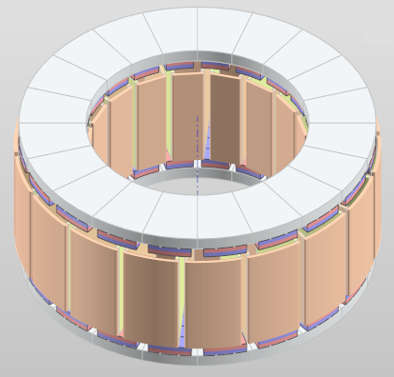
A brief overview of the importance of electric vehicle motors and the need to compare axial and radial flux motor designs
Electric vehicles (EVs) have been increasingly popular due to their ability to reduce greenhouse gas emissions and reliance on fossil fuels. The electric motor is one of the key components of an EV, providing the necessary torque to propel the vehicle forward. As such, the efficiency and performance of the motor are crucial for the overall performance of the vehicle, including its range and acceleration.
Two common types of electric motors used in EVs are axial flux and radial flux motors. These motors have different designs and characteristics, which can affect their efficiency and performance in different ways. Therefore, it is important to compare the performance of these two motor types to determine the best option for EV applications.
Motor efficiency is particularly important for EVs since it directly impacts the vehicle’s range. A more efficient motor can provide the same amount of power using less energy, which can extend the range of the vehicle. Moreover, a motor that has higher power density and torque can improve the acceleration of the vehicle, leading to better overall performance.
Given these considerations, a comparative evaluation of the efficiency and performance of axial flux and radial flux motors for electric vehicle applications is critical to better understand the strengths and weaknesses of each motor type. This evaluation can help to optimize the motor design and control for the best efficiency and performance, ultimately leading to better-performing and more efficient EVs.
Research question and objectives of the study
The research question of this study is to compare the efficiency and performance of axial flux and radial flux motors for electric vehicle applications. The study aims to evaluate these two motor types under various operating conditions to better understand their relative strengths and weaknesses.
The main objectives of this study are to:
1. Analyze the efficiency and performance of axial flux and radial flux motors for electric vehicle applications under different operating conditions, including load and speed.
2. Compare the power density and torque of these two motor types to determine their impact on the acceleration and overall performance of the vehicle.
Evaluate the impact of motor control algorithms on the efficiency and performance of axial and radial flux motors.
3. Conduct an electromagnetic analysis of the motors to determine the back EMF and its effect on motor performance.
4. Determine the optimal motor design and control strategies for achieving the best efficiency and performance for electric vehicle applications.
By achieving these objectives, the study aims to contribute to the understanding of the performance of axial flux and radial flux motors for electric vehicle applications. Additionally, this study may provide insight into potential improvements that can be made to motor design and control, leading to better-performing and more efficient EVs.